Traces of Edvard Munch’s story can be found in several places throughout Fredrikstad. In Storgata 26 – in what was once known as “Forstaden” – two women were born who would have a lasting influence on the artist’s life. These were his mother, Laura Cathrine Munch (née Bjølstad), and his beloved “Aunt Karen”, Karen Bjølstad.
Laura Cathrine was born on 10 May 1837 and died at only 31 years of age, leaving behind her husband and five children. Her sister Karen, born on 25 October 1839, stepped in to care for the children and became a lifelong source of support for Edvard Munch. He described her as a creative woman with a strong influence:
“She was probably the one who contributed most to me becoming a painter – at least at such an early stage.”
Munch’s parents, Laura Cathrine and Christian Munch, were married in Glemmen Church in Fredrikstad on 15 October 1861. As a child and later as an adult, Munch often visited his grandfather Andreas Larsen Bjølstad and step-grandmother Marie in Storgata. Letters also mention visits to an uncle who served as harbor master in Fredrikstad, living at Bjarne Aas gate 6.
Artistic connections to Fredrikstad
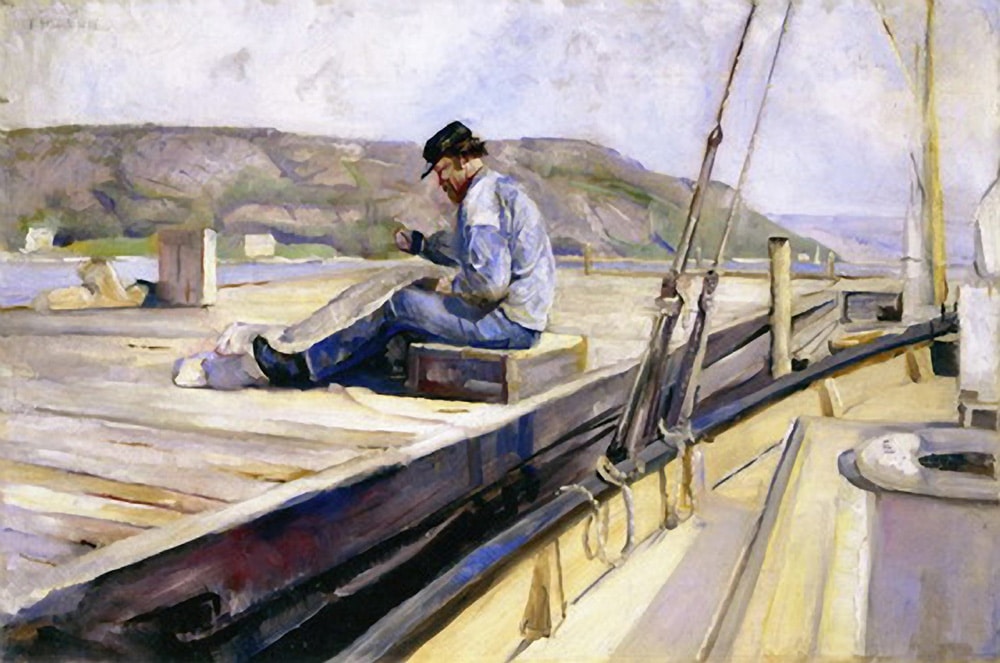
One of Munch’s most important artistic ties to the city is the painting The Net Binder, created on Hankø in the summer of 1888.
Other Munch works connected to Fredrikstad include:
“Grandfather Bjølstad on his deathbed” (1888), painted in Storgata 26
A drawing of grandfather Bjølstad (early and undated)
“World-famous” models
Munch used his mother, Laura Cathrine, both as a living model and as posthumous inspiration in many of his works. Karen Bjølstad was also a model for several well-known paintings, such as The Sick Child and Spring – both created at Schous Plass in Kristiania (Oslo) – along with numerous other portraits.
In a letter from Christmas 1900, Aunt Karen wrote to Edvard from Fredrikstad:
“In Fredrikstad, we read in the papers that your painting ‘Spring’ received such a favorable placement. Perhaps you saw it in Morgenbladet – in what they call the Hall of Honour for modern art, your monumental painting was given the place of honor. It is so deeply moving and beautiful.”
In Munch’s Footsteps – Walking Trail in Fredrikstad
Fredrikstad has created a historical walking route with six key locations connected to Edvard Munch’s life and family. Each stop features an information board detailing his family roots, childhood memories, and sources of artistic inspiration.
Selected locations on the trail:
Isegran: Munch’s paternal ancestor, Søren Rasmussen Munch, served here under Tordenskiold in the 1700s.
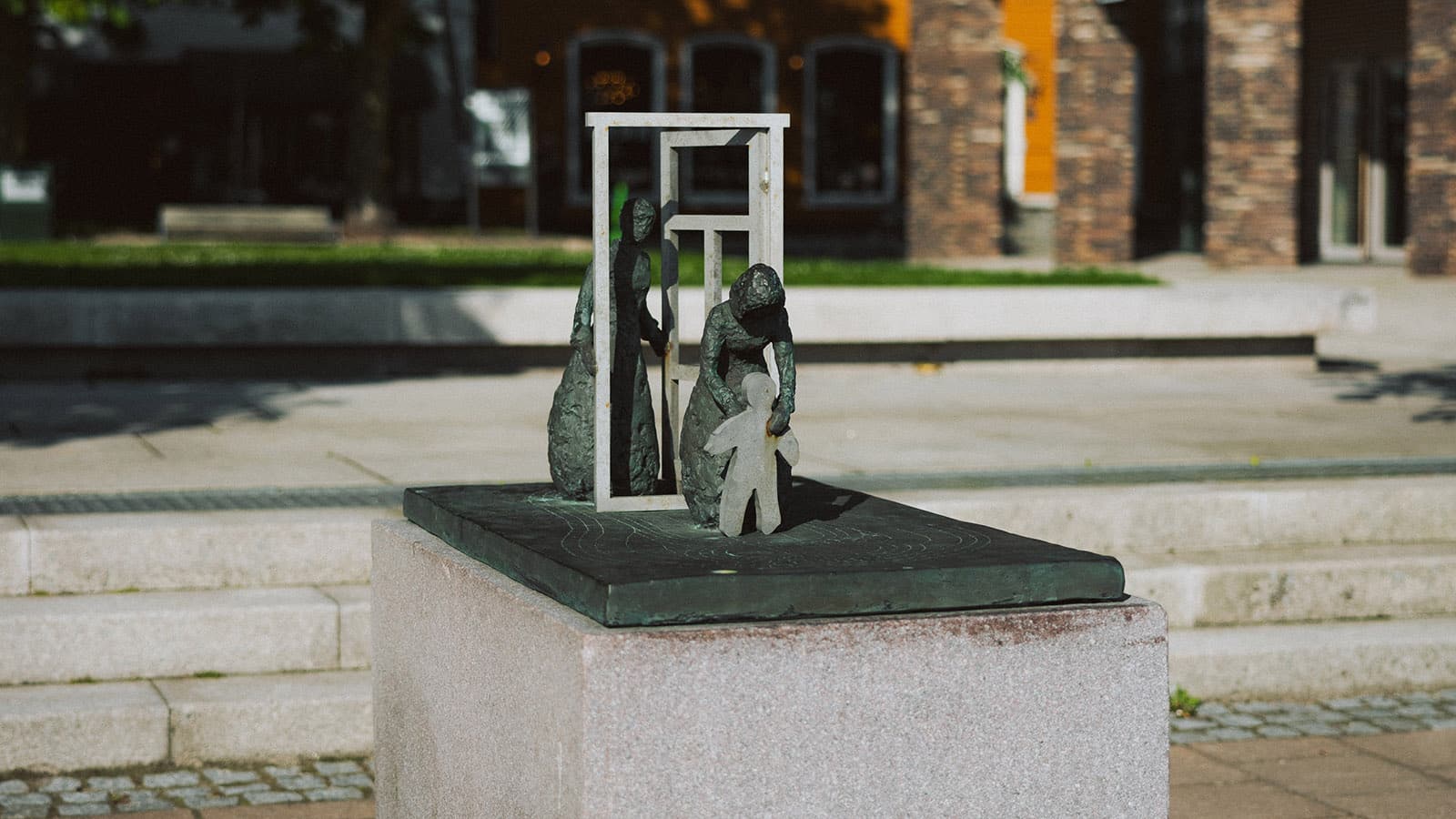
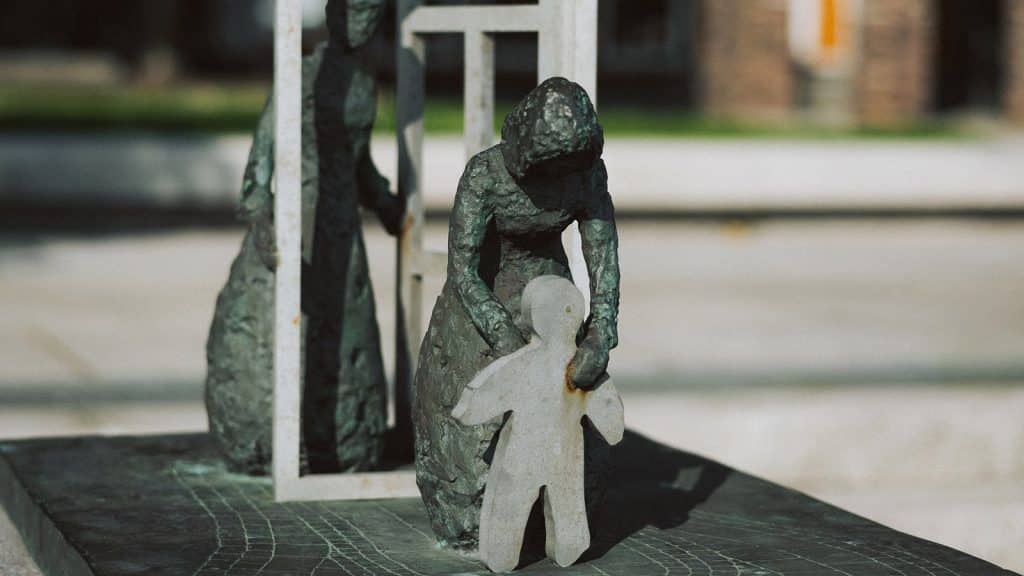
Storgata 26 / Blomstertorget: Birthplace of Munch’s mother and aunt. The sculpture Munchs Mødre (Munch’s Mothers) now stands on the square.
Glemmen Church: Site of Munch’s parents’ wedding.
Old Glemmen Church: Burial site of Munch’s maternal family.
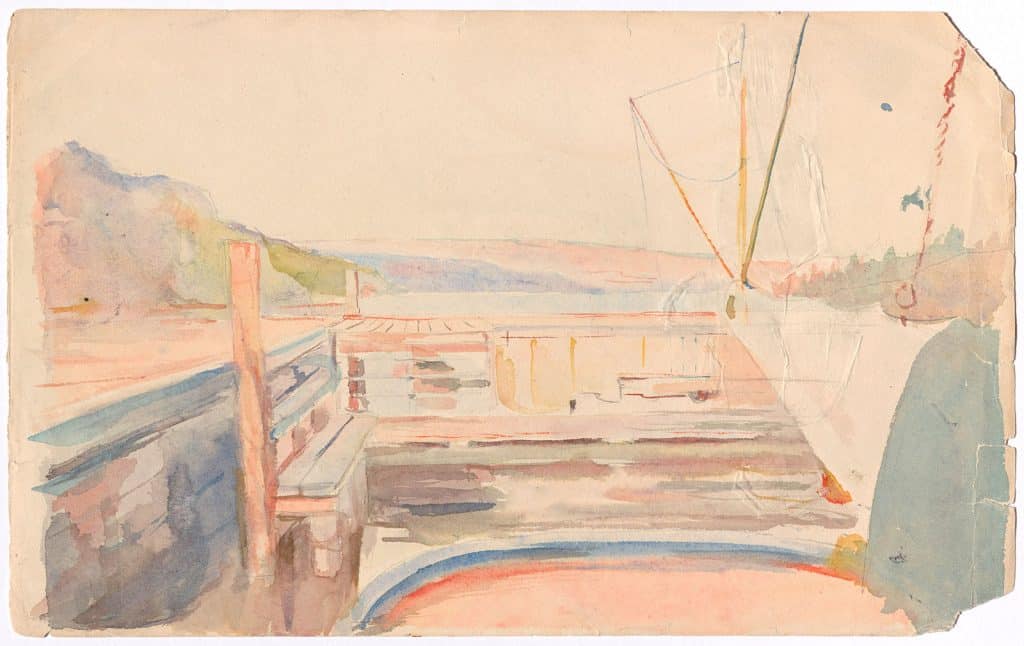
Hankø Island: Where Munch painted The Net Binder and On the Pier in 1888.
Edvard Munch was born on 12 December 1863 in Løten, Hedmark. He was the son of Christian Munch from Oslo and Laura Cathrine Bjølstad from Fredrikstad. The family moved to Oslo shortly after his birth. The early deaths of his mother and eldest sister, combined with his own poor health and his father’s intense religiosity, left a deep mark on Munch’s sensitive nature. These experiences gave his art its signature emotional depth and introspection.
Selected works:
The Scream (1893) Vampire (1892–94) Madonna (1894–95) The Dance of Life (1900) Girls on the Bridge (1902)
Just an hour from Oslo, the twin destination of Fredrikstad and Hvaler offers the perfect mix of city life and coastal tranquility. Here, cobbled streets meet salty sea breeze, and history blends naturally with modern life.
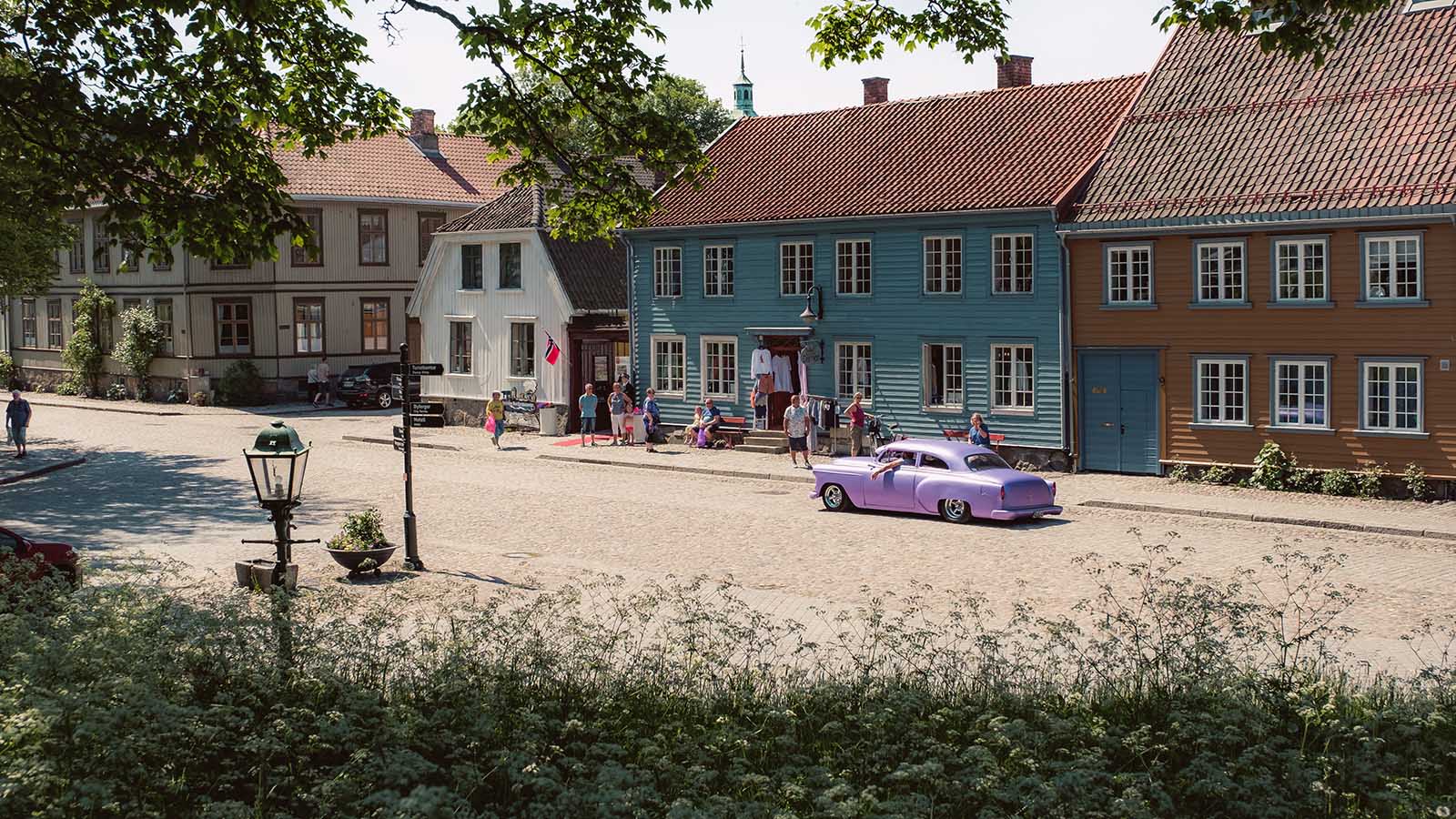
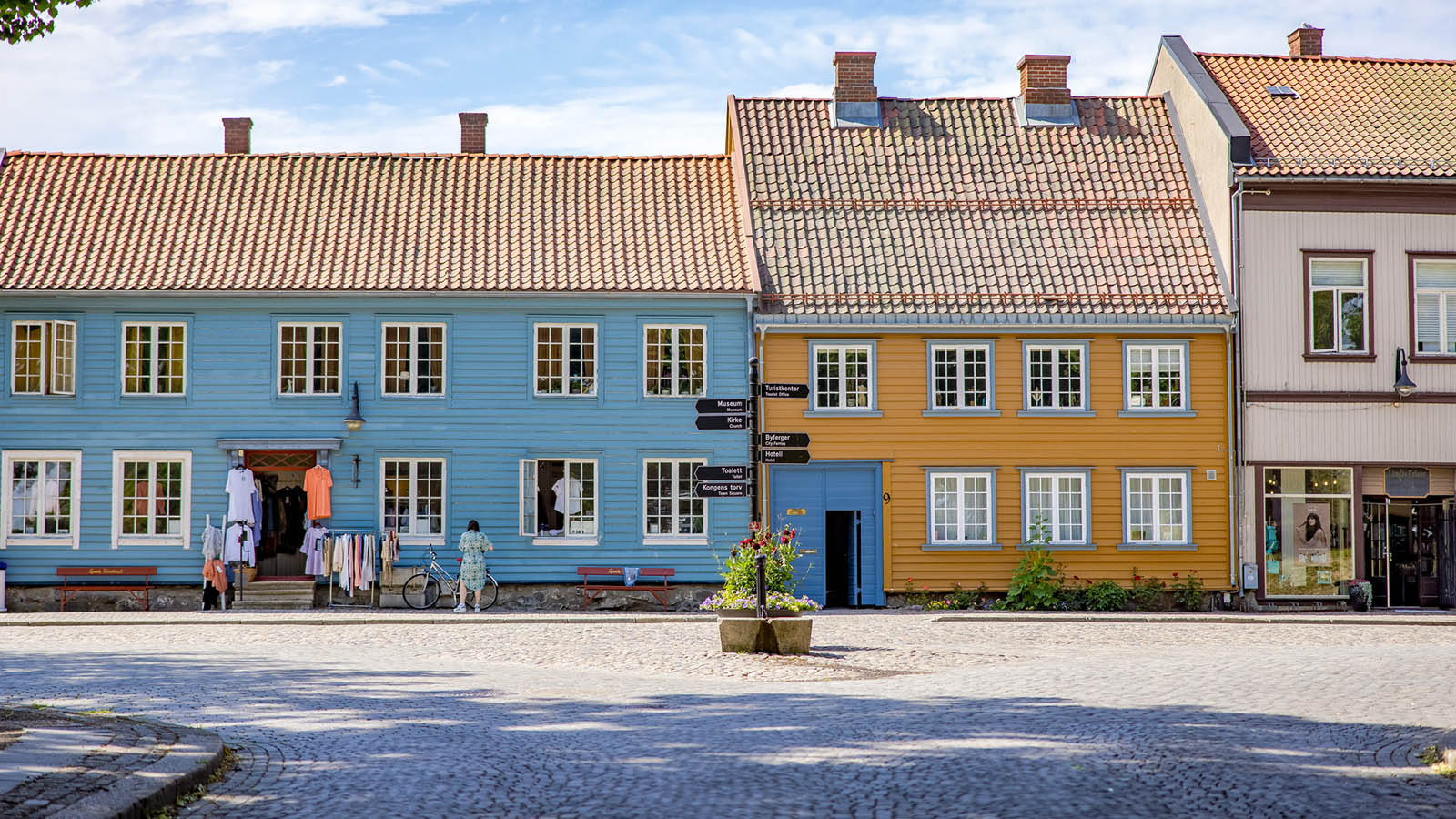
In Fredrikstad, the river Glomma divides two worlds: the modern city centre on the west, with its lively waterfront lined with cafés and restaurants, and the Fortress Town (Gamlebyen) on the east bank – Northern Europe’s best-preserved fortified town. Within its historic walls you’ll find a charming mix of cobbled streets, small wooden houses, galleries, cafés, museums and local craftsmanship. The Old Town is a living museum where people still live, work and create every day.
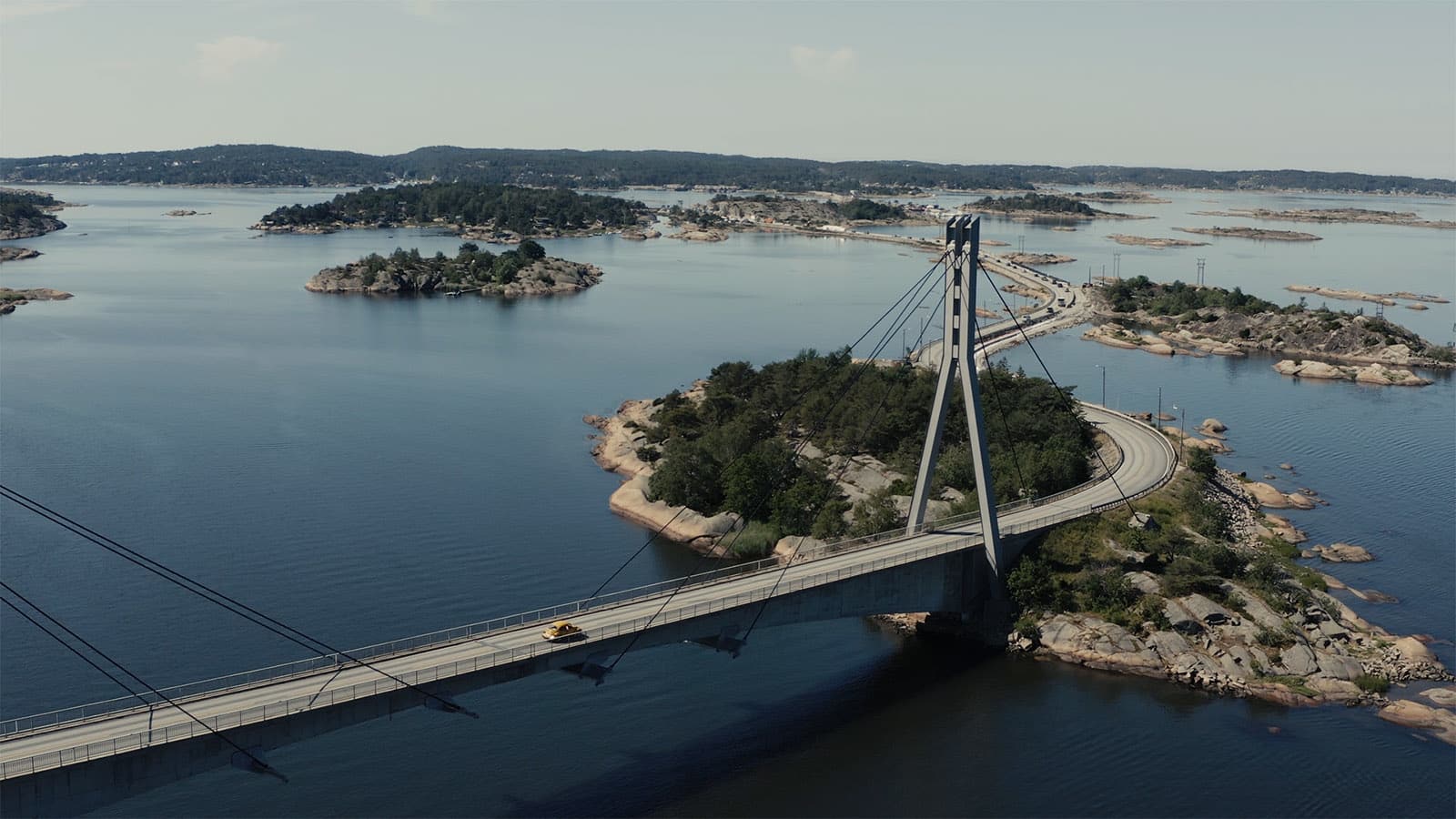
Out in the Hvaler archipelago, Norway’s first Marine National Park awaits. With more than 800 islands and skerries, this is a paradise for island hopping, kayaking, diving, hiking or simply relaxing by the sea. The region enjoys some of the country’s highest number of sunshine hours, making it a perfect escape for nature lovers in all seasons. On the main islands you can explore art galleries, open gardens, local food producers and cosy seaside restaurants serving freshly caught seafood.
Together, Fredrikstad and Hvaler form a destination full of contrasts – lively yet peaceful, historic yet creative, urban yet close to nature. Whether you come for a weekend by the river, a cultural walk through cobbled streets, or a summer adventure among the islands, this is a place that welcomes you all year round.
Hardly an hour from Oslo and you are in the beauty of Fredrikstad and Hvaler – just taking it all in is an experience in itself!
Go island-hopping around Hvaler, spend the night in a lighthouse, and let the sunrise warm the naked rocks by the shore. For you and your girlfriends the stunning coastal islands are the perfect place to spend some lazy days and enjoy quality time with great food.
Fredrikstad’s Old Town (Gamlebyen) is living history – quaint shops, charming cafés, intimate galleries and 500 years of fascinating heritage. And all of this is a short (and free!) ferry hop from Fredrikstad’s pulsating city centre.
If beautiful surroundings are your kind of thing – this is a trip you’ll be talking about for years. We’ve got the perfect backdrop for unforgettable memories – just add your own stories, laughs, and a drop of craziness!
Why choose Fredrikstad and Hvaler?
Did we mention our coastal paradise – with hundreds of small and large islands?
Fredrikstad is a quick hour from Oslo, easy to get to by road and rail
The attractions are laid out on a silver platter for you – with short distances between them you don’t waste time getting around
Who have most sunny days in Norway? We do, of course!
Get your bag packed and leave everyday behind! Give old memories a fresh lick of paint, or make some shiny new ones!
TRIP 1: Gils getaway with a bit of culture
GAMLEBYEN | ISEGRAN | FREDRIKSTAD
We don’t like to boast – but Fredrikstad’s fortress town, Gamlebyen, is listed as the best-preserved fortress town in Scandinavia. If you girls have been looking for some quality time together, look no further than the cobbled streets and picturesque houses of Gamlebyen. You can get a cultural recharge in idyllic surroundings, then chatter the evening away in one of the secluded courtyards. Yepp, you can even hire a flat here with its own other-worldly courtyard. Almost like being in a movie!
Where was art before it was art? In the artist’s head, of course! At Bastion 5 you can see art becoming art. Nine artists are at work in this charming environment. There are exhibitions and a vibrant café with live concerts. More art being made as you watch – at Glasshytta (The Glass House) just a stone’s throw away, at the moat bridge. In just a few minutes the glowing mass is transformed into beautiful collectibles! Ask nicely and you may even get to blow your own glass.
Want to steady your pulse – alone or together? There’s nothing more relaxing than strolling by the moats and atop the ramparts of the Old Town. Maybe pick up a snack at Mormors Cafe and make a picnic in the shade of ancient trees and battlements.
Fredrikstad is a small town with the heart of a city, and it’s just a short ferry hop from the old to the new town. Free of charge, the City Ferry (Byfergen) takes you from Gamlebyen to Isegran and the town centre. It’s the loveliest little ferry ride in Norway! A great way to see Fredrikstad from the river.
And what a delightful town centre! Shopping, restaurants, stylish cafés – and, of course, Brygga. Along this riverside promenade, restaurants and bars jostle shoulder to shoulder to please you. Locals and visitors alike, they all flock down to the river to find a table and enjoy a couple of chilled glasses and a platter of shrimps. Nygaardsplassen is a secluded square in the bosom of the town – and has been called “Fredrikstad’s own little corner of Brooklyn”. There are several high quality restaurants to choose from. The “city heart” of the town beats strongest in its shopping – everything from specialist stores and unique interior and fashion boutiques to the new shopping centre Værstetorvet.
How to get here? It is easy to get to Fredrikstad by bus, train and car. There is a free ferry service between the Old Town (Gamlebyen) and the town centre.
TOUR 2: Island hopping on Hvaler
HVALER
Do the round trip of Hvaler’s island paradise, hopping by foot or car, bus or boat. A skerry you can hardly find on the map might turn out to be your perfect secluded bathing spot. For you and your girlfriends the stunning coastal islands are the perfect place to spend some lazy days and enjoy quality time with great food.
Fish, swim, paddle, eat, hike, read or perhaps sail? Hvaler spoils you for choice. Hvaler is a kingdom of islands and skerries – 833 in all. In other words, a lot of naked, sun-warmed beach rocks to get to know. You can go island hopping to several of the largest with the ferry route from Skjærhalden.
We also recommend a low-gear hike along the Coastal Trail (Kyststien) that starts in Skjærhalden. In the national park you will discover Bronze Age cairns, medieval ruins, a medieval church, Rødshue Sculpture Park, and Homlungen Lighthouse. Plot in a stop at the Outdoor House (Friluftshuset) on Storesand beach, where you can buy refreshments. But do remember that the local custom is to bring your own food along with you on a trip. There are several small grocery stores to choose from, most open late in the evening and on Sundays.
Hvaler is also known for its restaurants. In the maritime heart of Skjærhalden is Big Fish Café. At this family-run eatery all the food is prepared on site – with a love of good food as the principle ingredient. The café has become a favourite among people who prefer shrimps fresh off the boat and other low-mileage dishes. And if you like ice cream – well, treat yourself to their Italian gelato!
How do you get to your coastal paradise? You can come by car or take the express bus from Oslo. Alternatively, take the train to Fredrikstad and pick up the bus there.
Fredrikstad and Hvaler are two generous neighbours that complement each other: culture and urban energy on one side of the fence, sea and coast on the other. Together they form the perfect destination – all year round and in all sorts of weather. Here are some tips to enjoy Fredrikstad and Hvaler.
1) Drive a train at Gamlebyen Model Train Center
The centre is the largest in Scandinavia. It’s packed with fun – a whole world of tiny trains, cars, houses, people and landscapes, all fashioned with a dash of humour. There is a miniature model of Gamlebyen. Open at weekends and in school holidays.
2) Take a dip
Fredrikstad and Hvaler are great for swimmers, whether you choose the outdoor pools at Kongsten with its diving tower, paddling pool and water slide, or one of countless beaches. Kroksand on Hvaler and Foten in Fredrikstad have both been awarded the international certificate of quality, the Blue Flag.
3) Boat trips and island hopping
The coastal islands of Fredrikstad and Hvaler should be seen from a boat. From Skjærhalden, take a trip to Strømstad on Vesleø II, or go island hopping with the local ferry. Around Hvaler that’s a great experience, you will be spoilt for choice.
4) Play crazy golf in a model of Gamlebyen, the historic old town
Just outside Gamlebyen is Aktivitetsbyen Gamle Fredrikstad. The new Adventure crazy golf course has 12 holes that take you past models of all the Old Town’s most famous historic buildings. Will you manage to get past the cannons on the fortress wall on the way to Kongsten Fort? You can also try your skill at Football Golf.
5) Visit the best-preserved fortress town in Northern Europe
Wander the ramparts of Gamlebyen, Fredrikstad’s Old Town. Explore the moats, cannons, historic buildings, shops, galleries, restaurants and cafés. Remember: the shops in the Old Town are open on Sundays all year.
6) Explore The Glomma Trail by bike
By bike along Glommastien (The Glomma Trail) there are great places to stop: Roald Amundsen’s Birthplace, the Hans Nielsen Hauge Museum, Hafslund Manor Farm, Sarpefossen waterfall and Oldtidsruta.
7) Visit Norway’s first marine national park
Ytre Hvaler National Park is Norway’s first marine national park, and has its Visitor Centre at Skjærhalden. Here there are fascinating exhibitions describing the flora and fauna of the national park, especially the marine life underwater. The centre has also a Lilliput Centre in Skjærhalden harbour with an activity programme for children all summer.
8) Discover our ancient history
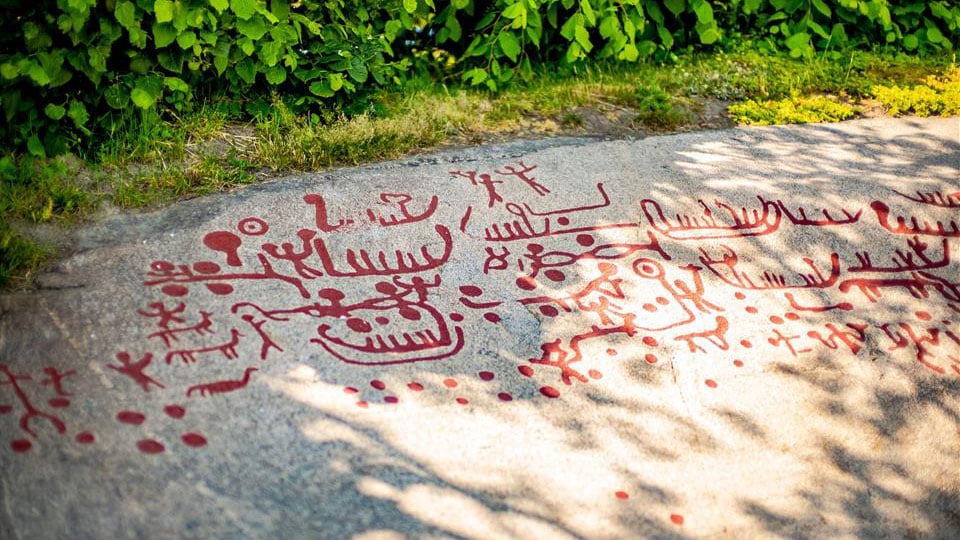
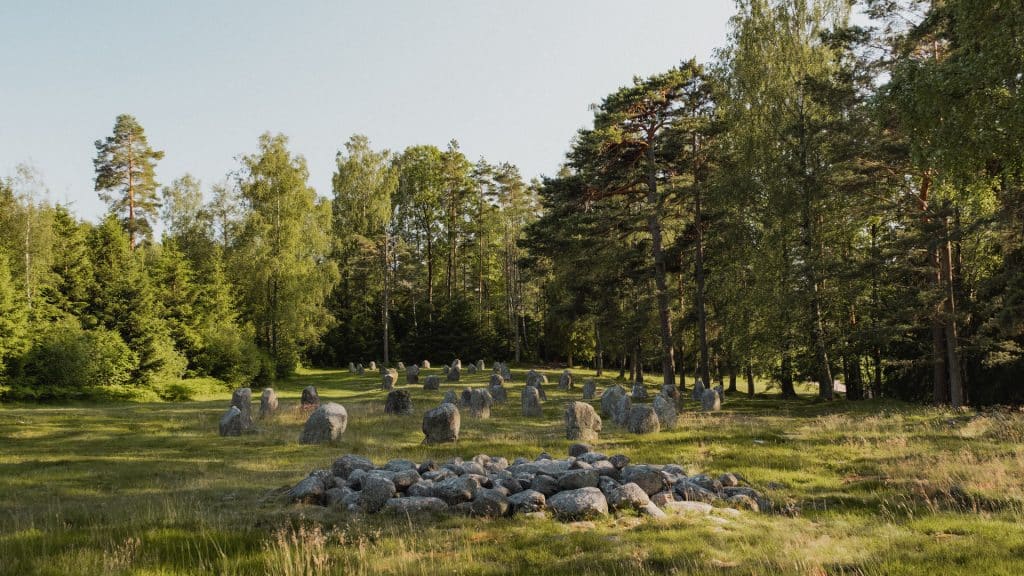
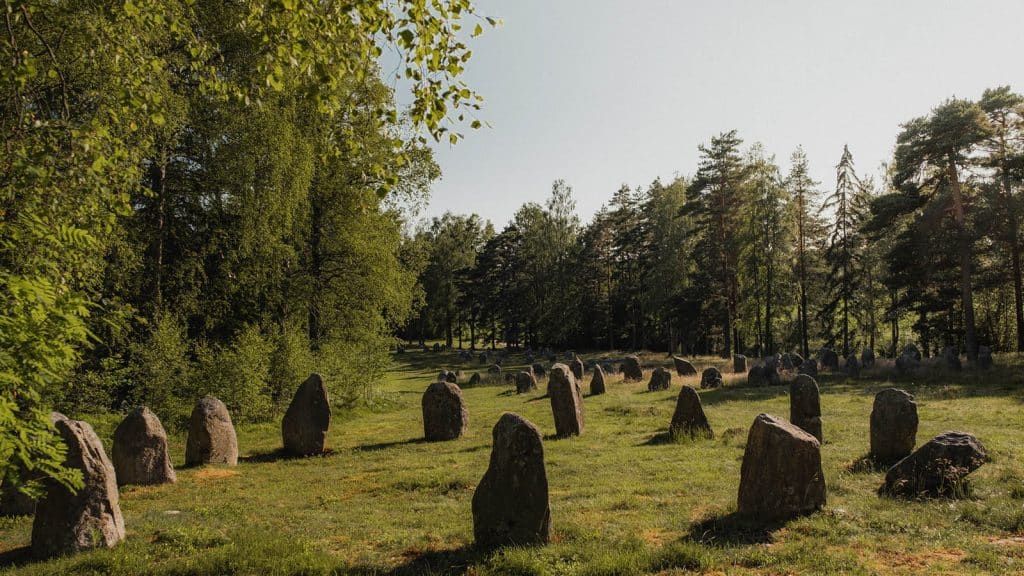
Go time-travelling along Oldtidsruta (The Ancient Trail). This round-trip takes you to Norway’s largest collection of heritage sites from the Bronze and Early Iron Ages, with burial mounds, stone circles, megaliths and rock carvings. Visit also Fredrikstad Museum, Elingaard Manor Farm and Kystmuseet on Hvaler – history for all ages.
9) Camera! Lights! Action! – at Norway’s best cinema
Fredrikstad Cinema has been named the best in the country for several years running.
10) A river cruise
With the City Ferry you get a miniature cruise on the Glomma river, with stops at Gamlebyen, Isegran, Kråkerøy, Sentrum and Gressvik.
Norway’s most concentrated collection of cultural monuments from the Bronze and Iron age.
By driving along highway 110, you will find many cultural and historical monuments dating back to the Bronze and Iron Age. From Skjeberg in the south, via Fredrikstad in the west, up to Hafslund, Sarpsborg in the north and Solbergkrysset on the E6, there are many such monuments.
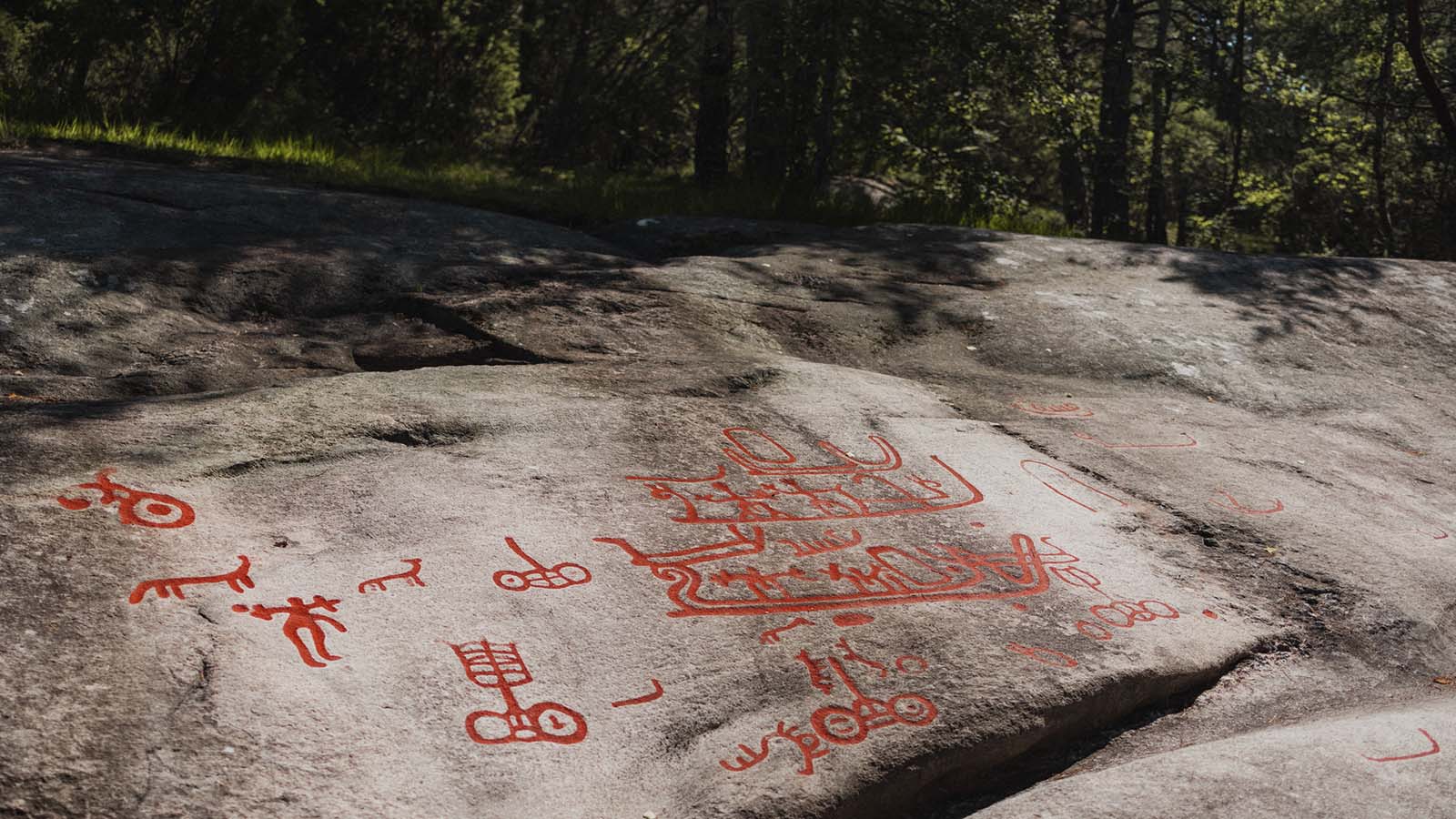
The historical round trip will show you ancient burial mounds, large rocks spread into rings, ancient refuges and monumental rock carvings depicting our ancestors’ way of life and religious beliefs.
Please note that most of the rock carvings are covered during the frost season (November to March).
Solberg
At Solberg you will see many rock carvings depicting the creation of the Nordic religion from the Bronze Age. Here you will see four wheeled carry wagons, both a large and small tree, dreadful Gods, sun pictures and more. The field is situated along the highway and is easily accessible.
Hornnes
Follow the small path through the forest to see a sight of the 22 beautiful sun ships that are travelling through the sky to meet the Sun god. This rock carving site is from the early Bronze Age peiod and shows the most important symbol from that time, the ship.
Storedal kultursenter (culture centre)
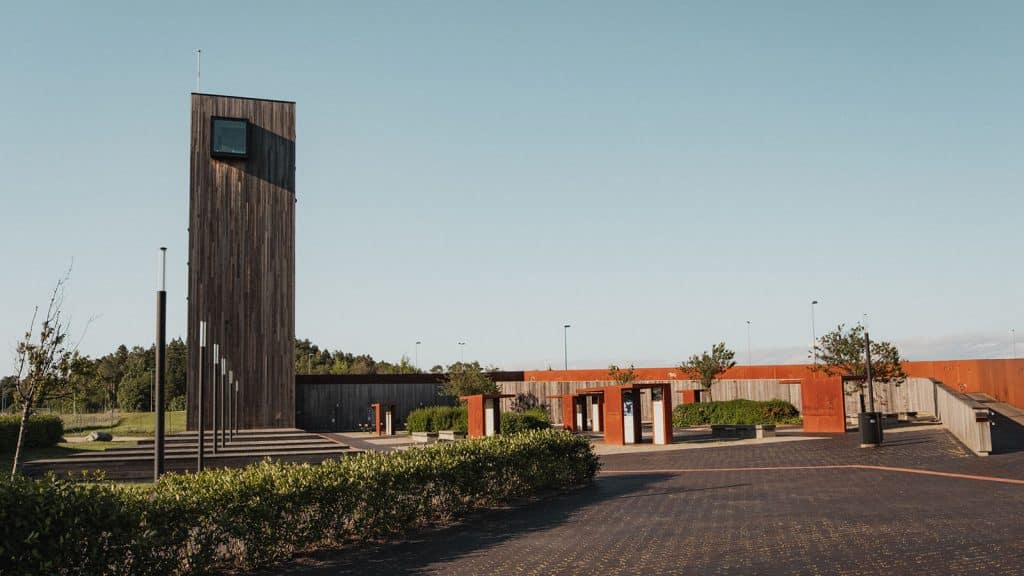
A few kilometres from the highway you will find the sound sculpture ”Ode til lyset” by Arnold Haukeland and music by Arne Nordheim. The site also has an amphitheatre, a study garden and a rock carving exhibition for the blind.
Gunnarstorp
The steep field at Gunnarstorp is full of burial monuments from the Iron Age. A 3 metre high and 30 metre wide burial mound from the later Bronze Age period, probably more than 3000 years old, triumphs on top of the field. Further on into the forest you will find some large rock statues placed in a circle.
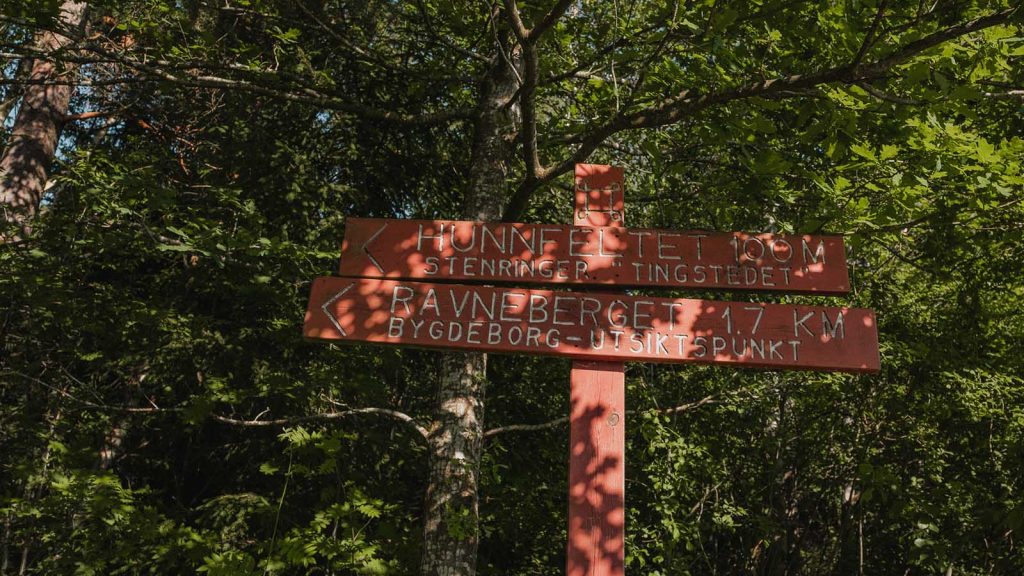
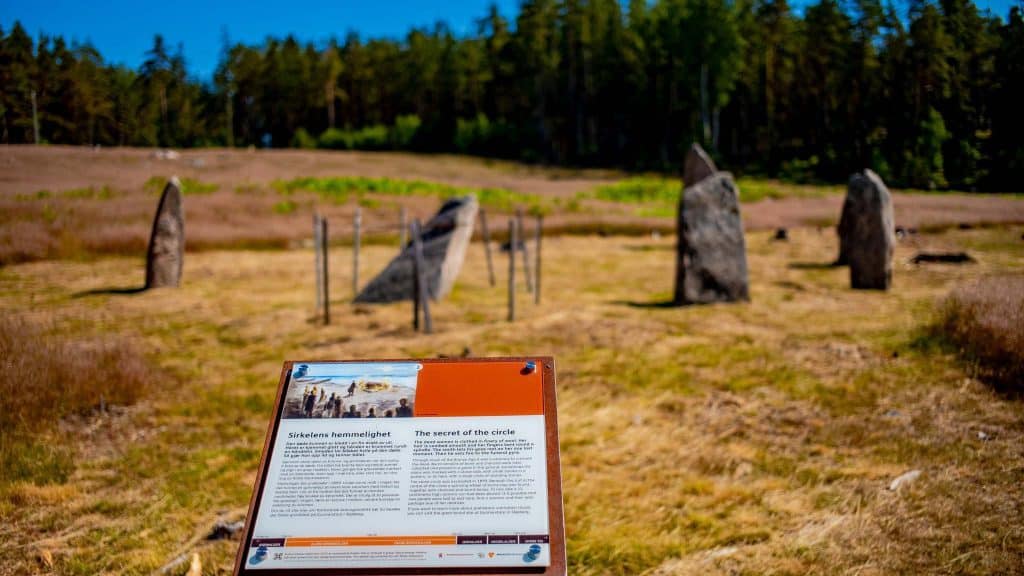
Steinringfeltet at Hunn (stone rings)
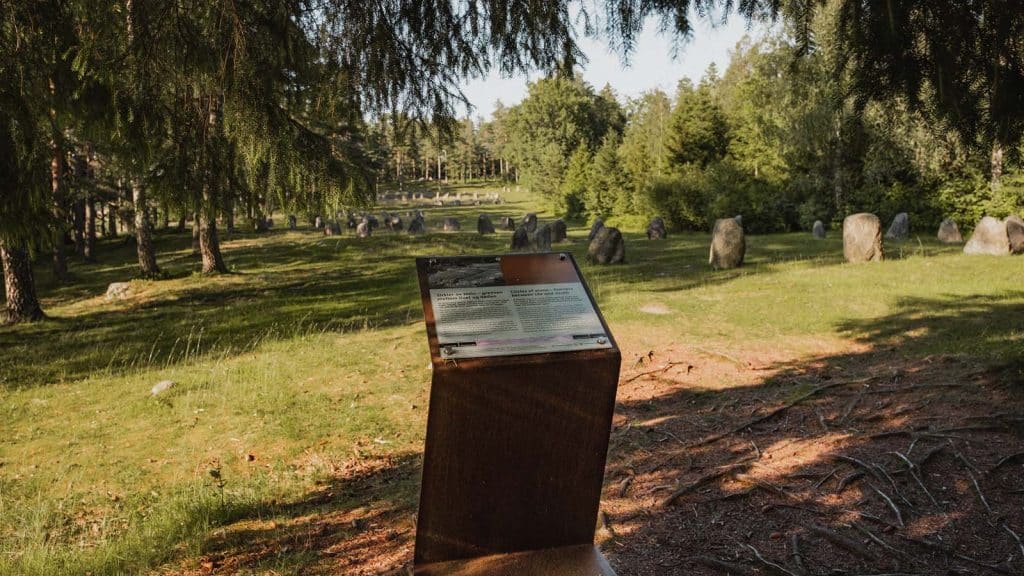
Many people see this as the most spectacular cultural monument on the route. Here you will find a number of graves from the Iron Age, consisting of large stone blocks placed in rings. You will also find some smaller graves and burial mounds scattered over a large area, creating a very special atmosphere.
The mass grave field at Hunn
There are mass graves from both the early and later stages of the Iron Age here. A large amount of findings made by archaeologists have been made here. Through the area is a cave passage, several thousands of years old. On the map it is shown as a deep ditch.
Ravneberget
At Ravneberg you will find many early houses, dating back to 400 AD. Walk up to the top of the stone ring field, following the path to the left up the terrain until you reach the top of Hunnfjellet (mountain).
Begby (Gullskår and Skolefeltet)
Here you will find two large, great rock carving fields from the early stages of the Bronze Age. There are various motives, including a ship shaped like an animal, wagons, sun symbols and people. You will find two of the most remarkable rock carvings here; Begbymannen and Danseren.
Opstadfeltet (The field at Opstad)
This is a large stone ring field from the Iron Age. Here you will find stone remains of a street parade. The field has recently been examined by archaeologists. From the field, you can take a short cut to Kalnes agriculture school and take a look at the beautiful rock carvings situated right by it.
Hafslund
On the field outside Hafslund Manor Park you will find a small island with many rock carvings. The motives span from ships, to foot traces and sun symbols. Back in the park you will see large burial mounds from the Iron Age.
Bjørnstadskipet
This is one of Northern Europe’s largest single standing rock carving. It is a large and beautiful ship depiciting two twin Gods with raised axes looking into the horizon. The ship is 4,5 metres long and is carved vertically in a small grove in the forest.
Plan your visit to Fredrikstad and Hvaler, regardless of mobility level. Find information on accessibility for activities, attractions, accommodations, and transportation.
Fredrikstad and Hvaler welcome everyone and are continuously working to become a more accessible destination for all visitors.
Gamlebyen (The Old Town)
Gamlebyen is one of the best-preserved fortress towns in Northern Europe, with history dating back to the 1600s. As an old town, it is not fully adapted for all accessibility needs. The streets and sidewalks are cobblestone, with some level differences and uneven surfaces in several areas.
For wheelchair users, people with reduced mobility, or visual impairments, getting around can be somewhat challenging. However, the area around Bastion 5, where you will find Café Magenta and several galleries, has gravel paths, an accessible restroom, and nearby parking.
Gamlebyen is a charming district to visit, and with some planning, many can still enjoy the experience.